

Every mineral crystal you see—whether it’s a perfect quartz point or a blocky halite cube—reflects an invisible internal order. That order is defined by how atoms are arranged in three-dimensional space. The symmetry and geometry of that arrangement determine a mineral’s crystal system.
Crystal systems classify minerals based on the symmetry of their crystal lattice. There are seven primary crystal systems, and understanding them is key to identifying minerals and understanding how they grow.
What Is a Crystal System?
A crystal system describes the shape and symmetry of a mineral’s internal atomic structure. Even if a crystal appears irregular on the outside, its internal structure follows strict geometric rules.
Each crystal system is defined by:
- The number of crystallographic axes
- The relative lengths of those axes
- The angles between them
These parameters determine the overall symmetry of the mineral.
The Seven Crystal Systems
1. Cubic (Isometric) System
The cubic system has the highest symmetry.
Axis characteristics:
- Three axes
- All equal length
- All at 90° angles
This produces highly symmetrical shapes such as cubes and octahedrons.
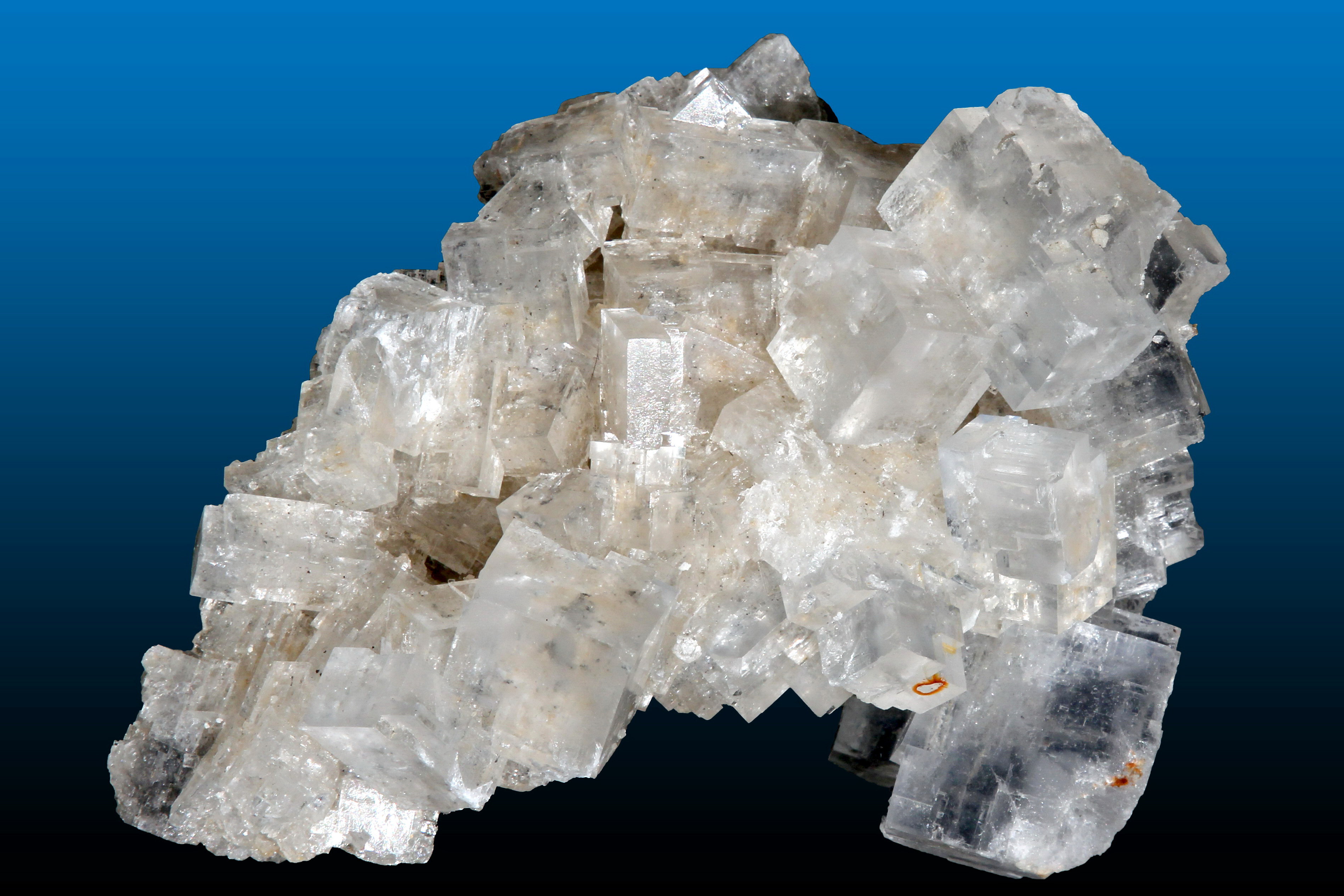


Common cubic minerals:
- Halite
- Pyrite
- Fluorite
- Garnet
Because of its symmetry, cubic minerals often look well-balanced and blocky.
2. Tetragonal System
The tetragonal system resembles cubic but is slightly stretched.
Axis characteristics:
- Three axes
- Two equal length
- One longer or shorter
- All at 90° angles


Common tetragonal minerals:
- Zircon
- Rutile
Crystals often form elongated prisms.
3. Orthorhombic System
This system has three unequal axes but maintains right angles.
Axis characteristics:
- Three axes
- All different lengths
- All at 90° angles


Common orthorhombic minerals:
- Topaz
- Sulfur
- Olivine
Shapes often appear prismatic or blocky but less symmetrical than cubic crystals.
4. Hexagonal System
The hexagonal system is defined by six-sided symmetry.
Axis characteristics:
- Four axes
- Three equal axes at 120° in one plane
- One vertical axis at 90° to the others


Common hexagonal minerals:
- Quartz
- Beryl
- Apatite
Quartz’s classic six-sided prism is a perfect example.
5. Trigonal System
The trigonal system is closely related to hexagonal but has threefold rotational symmetry.
Axis characteristics:
- Similar to hexagonal
- Threefold symmetry around vertical axis


Common trigonal minerals:
- Calcite
- Tourmaline
- Corundum
Calcite’s rhombohedral cleavage reflects this symmetry.
6. Monoclinic System
Lower symmetry appears in the monoclinic system.
Axis characteristics:
- Three unequal axes
- Two at 90°
- One not at 90°


Common monoclinic minerals:
- Gypsum
- Orthoclase
- Azurite
Crystals often appear skewed or asymmetrical.
7. Triclinic System
The triclinic system has the lowest symmetry.
Axis characteristics:
- Three unequal axes
- None at 90°


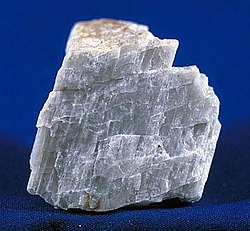

Common triclinic minerals:
- Microcline
- Kyanite
- Plagioclase feldspar
These crystals often appear distorted or irregular.
Why Crystal Systems Matter
Crystal systems influence:
- Cleavage patterns
- Optical properties
- Hardness variations
- Growth habits
- Symmetry and shape
For example:
- Cubic minerals often break into cubes.
- Hexagonal minerals commonly form six-sided prisms.
- Triclinic minerals rarely show obvious symmetry.
Crystal systems also help geologists identify minerals in the field and under microscopes.
Crystal Form vs. Crystal System
A crystal’s external shape (form) may not perfectly show its internal symmetry due to:
- Crowded growth conditions
- Impurities
- Rapid cooling
- Space limitations
However, its internal lattice always belongs to one of the seven systems.
Final Thoughts
Crystal systems reveal the hidden geometry of minerals. From the perfect symmetry of cubic crystals to the subtle asymmetry of triclinic forms, these classifications reflect the precise atomic architecture inside every mineral.
Understanding crystal systems is like learning the blueprint of Earth’s building blocks—showing how microscopic atomic order creates the stunning diversity of crystal shapes we see in nature.
About The Author


